

Our Pastoral Care Approach
The Pastoral Approach (CARE)
The CARE Framework: Nurturing the Whole Child
At Crest, pastoral care isn't a reactive measure –
it is a proactive, daily environment built on connection, awareness, regulation,
and safety.
Introduction to CARE
Our pastoral care system is deeply intertwined with our Brain-Informed Approach. To keep our students in their "upstairs brains," we cultivate an ecosystem known as CARE: Connection, Awareness, Regulation, and Environment.
The Four Pillars of CARE
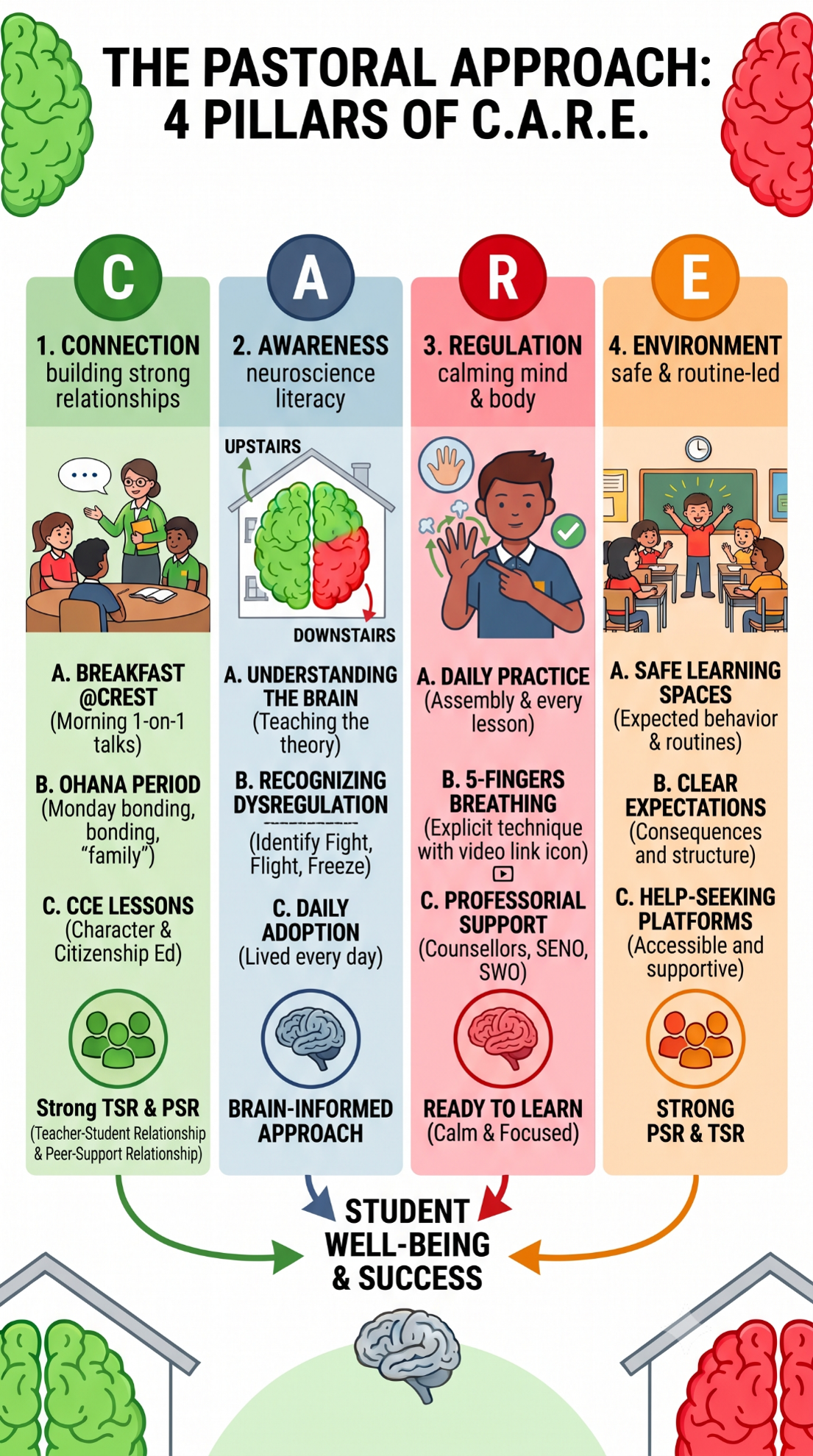
🤝 1. Connection (Building Strong Foundations)
We believe that learning blossoms from healthy relationships. Crest intentionally fosters deep Teacher-Student Relationships (TSR) and Peer-Support Relationships (PSR) through unique, dedicated platforms:
-
Breakfast@Crest: Morning assemblies are transformed into moments of connection. Form Teachers, CCA teachers, and Student Support staff sit down with students one-on-one over complimentary snacks and drinks. It is a casual, safe space for students to share their lives and voice their worries before the school day begins.
-
Ohana Period: Ohana is the Hawaiian word for family, signifying a bond that embraces friends, teachers, and the wider community. Every Monday, the first two periods are exclusively dedicated to Ohana. Form Teachers guide their classes through heart-to-heart sharing sessions, bonding games, and specially curated activities designed to strengthen the Crestan spirit.
-
CCE Lessons: Our Character and Citizenship Education (CCE) lessons are tailored to reinforce social-emotional skills and mutual respect among peers.
🧠 2. Awareness (Understanding Our Minds)
Awareness means equipping everyone in our community with the tools of neuroscience. We make an intentional, daily effort to build knowledge around the Brain-Informed Approach. Through explicit lessons, workshops, and everyday conversations, both staff and students learn to speak the same language of emotional awareness, ensuring that the Upstairs/Downstairs brain model is lived out, not just memorized.
🧘 3. Regulation (Ready to Learn, Ready to Succeed)
A dysregulated brain cannot absorb a textbook. Therefore, we integrate emotional and physiological regulation into the daily school routine:
-
Daily Mindful Breathing: Every morning assembly and the start of every single lesson begins with a collective grounding practice. Students practice the 5-Fingers Breathing technique to deliberately calm their nervous systems, quiet their downstairs brains, and step into a focused learning state.
*You can preview this calming exercise via this 5-Fingers Breathing Guide Video.
-
A Safety Net of Professionals: When students face heavier emotional loads, they are never alone. Crest provides a robust network of dedicated support personnel who actively reach out to students, including:
-
Form and Subject Teachers
-
School Counsellors
-
SwANs Companions (Special Educational Needs Officers / SENO)
-
Student Welfare Officers (SWO)
-
🏫 4. Environment (A Safe Haven for Growth)
For a brain to feel safe enough to learn, its environment must be predictable and secure. Crest designs a highly supportive ecosystem through:
-
Clarity and Routines: Consistent classroom routines, clear behavioural expectations, and transparent consequences give students a strong sense of predictability and safety.
-
A Culture of Care: By weaving strong Teacher-Student and Peer-Support relationships into the very architecture of the school, we ensure the physical and emotional climate is warm and welcoming.
-
Accessible Help-Seeking Platforms: We normalize asking for help. Multiple easily accessible help-seeking channels exist throughout the campus, ensuring that no student ever feels stranded when they are struggling.